The 12 Hz Tone Generator: Engineering Your Brain's Optimal Learning State
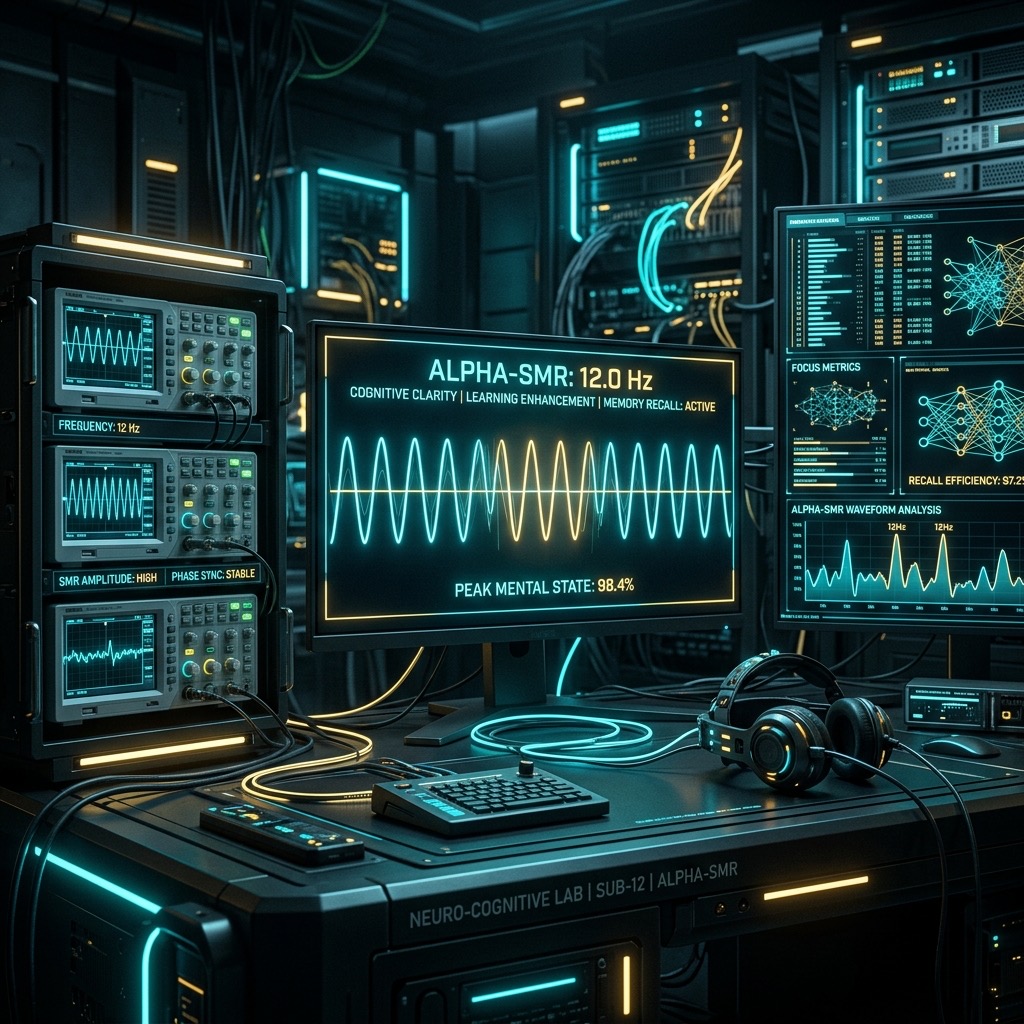
Let’s cut through the noise. You didn't search for "12 Hz" because you were curious about a random number. You searched because you've likely hit a cognitive wall—that frustrating fog where information goes in but doesn't stick, or where you're physically present but mentally absent. You're looking for a lever to pull, a dial to turn, to shift your brain from a scattered, high-beta state into the calm, receptive clarity of low-alpha. 12 Hz is that lever. It's not just background noise; it's a targeted acoustic stimulus designed to coax your neural oscillations into a rhythm conducive to absorption and recall.
Before we dive into the mechanics of the generator itself, let's get one thing straight about the physics of this specific frequency. 12 Hz is a sub-auditory beast. Most consumer speakers—laptops, phone speakers, even many bookshelf monitors—will physically struggle or simply fail to reproduce this tone. You won't "hear" 12 Hz in the traditional sense; you'll feel it as a pressure wave, a low rumble that you perceive in your chest and jaw rather than your eardrums. This changes the entire game plan for how we approach this tool.
Why 12 Hz? Solving the "Foggy Brain" and Memory Retrieval Crisis
You're here because you're dealing with a specific, frustrating problem: the inability to access a state of relaxed focus. Your brain is likely stuck in a high-frequency beta loop (above 20 Hz), which is great for active problem-solving but terrible for deep learning and memory consolidation. When you're in beta, you're vigilant, sometimes anxious, and your brain is filtering out "irrelevant" sensory data to keep you alert.
12 Hz sits at the very top of the alpha band. Unlike lower alpha (8-9 Hz), which leans toward drowsiness, 12 Hz is the "sweet spot" of active, yet calm, cognition. It solves the problem of over-stimulation (you can't focus because you're stressed) and under-stimulation (you're too tired to care). By providing a rhythmic reference point, 12 Hz encourages your brain to synchronize its firing patterns, effectively quieting the "monkey mind" chatter and opening the gateways for working memory and long-term recall.
Gear Check: Why Your Phone Speaker is Useless Here
If you hit play on your laptop and heard nothing, don't panic. That's physics, not a broken tool. To truly experience 12 Hz, your equipment must be capable of moving air at a very low frequency. Here is the non-negotiable hardware hierarchy:
- The Gold Standard: Subwoofers (8" or larger). If you have a home theater setup or studio monitors with a dedicated sub, this is your ticket. You need a driver that can physically displace enough air to create the pressure wave. Place the subwoofer on a solid floor, not a hollow desk, to avoid rattling artifacts.
- The Compromise: High-End Over-Ear Headphones. Look for headphones with a frequency response that extends below 20 Hz (check the spec sheet for "20 Hz - 20 kHz" or lower). Even then, you'll feel this more as a "pressure" in your ear canal rather than a pure tone. Avoid earbuds; they simply cannot move enough air.
- The Reality Check: Phone Speakers & Laptops. These will produce a distorted click or a faint, buzzing static. This is not the 12 Hz tone; it's the speaker driver mechanically failing to reproduce the waveform. You will get zero brainwave entrainment benefit from this.
Step-by-Step: Operating the Generator for Maximum Effect
Once your equipment is ready, the operation is simple, but the tuning is critical. Here is the exact protocol I recommend:
- Set the Waveform to "Sine" (Crucial). Do not use square, sawtooth, or triangle waves. These introduce harsh upper harmonics that will overstimulate your auditory cortex and defeat the purpose of a pure, meditative sub-bass tone. A sine wave is a single, pure frequency.
- Volume Calibration (The "Pressure Test"). Start with the volume at 50%. Slowly increase it until you feel a physical pressure in your chest or a vibration in your jaw. You should not be able to "hear" a pitch clearly. If you hear a clear, high-pitched tone, you've turned it up too loud, or your speakers are distorting. Back off until it feels like a deep, earthy rumble.
- Duration (The "Pomodoro" Method). Set a timer for 25 minutes. This aligns with the classic Pomodoro technique for deep work. Do not loop it for hours; your brain will habituate to the stimulus and stop responding after about 30 minutes. Use it in focused bursts.
- Integration. As the tone plays, keep your eyes open but relaxed. Do not close your eyes (you'll drift into theta). Focus on your breath or the task at hand. The vibration is an anchor, not a lullaby.
Practical Applications: Getting the Most Out of Your Alpha State
This isn't a "chill out" track; it's a performance tool. Here is where 12 Hz shines in the real world:
- Deep Study & Language Acquisition: Play it softly in the background during vocabulary drills or reading technical manuals. The alpha state reduces internal "self-talk" (the voice reading the words in your head), allowing for faster visual processing and retention.
- Memory Recall (The "Exam" Cue): Listen to 12 Hz for 10 minutes before you study. Then, on the day of the exam, listen to 12 Hz for 5 minutes before you walk in. This creates a state-dependent memory link. The brain associates the physical vibration with the state of encoding, making retrieval easier.
- Post-Meeting "Reset": After a high-stress, high-beta meeting, 12 Hz acts as a cognitive reset button. It flushes out the cortisol spike and brings your executive function back online quickly.
Hard Limits: When 12 Hz Will Fail You
I need to be blunt about the limitations, because misuse leads to disappointment.
- Speaker Limitations (The 90% Failure Rate): As mentioned, if you are on a laptop, you are wasting your time. The speaker cone physically cannot oscillate that slowly. You will only hear a "click" at the start of the wave cycle, which is just the speaker slamming against its limits. This causes ear fatigue, not alpha entrainment.
- Hearing Loss (High-Frequency vs. Low-Frequency): If you have high-frequency hearing loss, this tone is actually easier for you to perceive via bone conduction. However, if you have conductive hearing loss (issues with the middle ear bones), the vibration may not transmit effectively.
- Environmental Noise: 12 Hz will not mask traffic noise or office chatter. It operates below the frequency of most human speech. If you need to block out voices, you need a white noise generator, not a sub-bass tone.
The 12 Hz vs. 10 Hz Distinction: Why the "Top" Matters
Many people confuse 12 Hz with the more common 10 Hz frequency. Here is the critical difference: 10 Hz is the "relaxation" frequency; 12 Hz is the "activation" frequency.
At 10 Hz, you are calm, but you may feel slightly "spacey" or disconnected—great for sleep onset or meditation. At 12 Hz, you are still in a relaxed alpha state, but you are on the cusp of low beta (13 Hz). This means you retain the calm, non-anxious focus, but you also have the mental energy to execute tasks. If 10 Hz makes you feel like you're floating, 12 Hz makes you feel like you're driving a fast car on a smooth, empty road. It's the difference between resting and ready.
Troubleshooting: The "I Can't Hear It" FAQ
Here are the three most common issues I see with users attempting to use a 12 Hz generator:
Issue 1: "I hear a rhythmic clicking, not a tone."
Fix: This is 100% speaker distortion. Your device cannot reproduce the frequency. You need to switch to a subwoofer or high-end over-ear headphones. Do not increase the volume to "hear" it better—you will only damage the speaker coil.
Issue 2: "I feel a vibration, but my ears hurt."
Fix: You are running the volume too high. The goal is a felt pressure, not an audible boom. Reduce the volume by 30% until the sensation moves from your ears to your chest. If you feel it in your ears, you are overdriving the system.
Issue 3: "It works for 5 minutes, then I feel nothing."
Fix: This is neural habituation. Your brain has adapted to the stimulus. Turn it off for 10 minutes. Do not leave it running on a loop. The power of 12 Hz is in its intermittent use as a priming agent, not as a continuous background drone. Use it as a tool, not as a soundtrack.
12 Hz Alpha-SMR Wave: Sleep Quality, Motor Inhibition, and Cognitive Efficiency
12 Hz sits at the upper boundary of the alpha band and overlaps with the sensorimotor rhythm (SMR), a well-studied oscillation generated over the sensorimotor cortex during states of quiet physical readiness. This frequency has a particularly strong evidence base in clinical neurofeedback, where SMR training is used for epilepsy, ADHD, sleep disorders, and athletic performance optimization. It represents the brain in a state of efficient, relaxed readiness: still, focused, and not wasting energy on unnecessary movement or mental chatter.
SMR and Sleep Architecture
One of the most significant and underappreciated functions of the 12-15 Hz SMR range is its role in generating sleep spindles, the characteristic EEG waveforms of Stage 2 non-REM sleep. Sleep spindles are produced by thalamo-cortical circuits in the same frequency range as SMR and serve critical functions in memory consolidation, sensory gating during sleep, and protection of sleep continuity.
- Sleep spindle generation: Sleep spindles at 12-15 Hz are produced by thalamic reticular nucleus circuits and serve as a gate that prevents external sensory stimuli from disrupting sleep continuity.
- Memory consolidation: Spindle density during Stage 2 sleep predicts the magnitude of overnight memory consolidation, with more spindles correlating with better next-day recall of learned material.
- SMR training and sleep: Neurofeedback studies training SMR in the 12-15 Hz range consistently report improved sleep quality, reduced insomnia severity, and increased sleep spindle density as measured by polysomnography.
- Insomnia mechanism: Insomnia patients show reduced spindle density compared to good sleepers, and spindle enhancement through SMR training or pharmacological means improves sleep maintenance.
Motor Inhibition, ADHD, and Self-Regulation
The sensorimotor rhythm at 12 Hz reflects active suppression of motor activity — the neural state of being physically still while mentally alert. This inhibitory capacity is directly relevant to the regulation deficits seen in ADHD, where insufficient SMR relative to theta produces the classic profile of hyperactivity and impulsivity.
- Theta-SMR ratio: The ratio of frontal theta to SMR is used as an EEG biomarker of ADHD; high theta relative to low SMR predicts inattention and hyperactivity severity.
- SMR neurofeedback for ADHD: Protocols rewarding SMR production at 12-15 Hz over central electrodes are among the most studied neurofeedback interventions, with multiple randomized trials showing improvements in attention, impulse control, and academic performance.
- Motor precision: Pre-movement SMR bursts at 12 Hz predict greater accuracy in fine motor tasks, with higher SMR power correlating with reduced tremor and greater movement precision in athletes and surgeons.
- Epilepsy management: Barry Sterman original discovery of SMR neurofeedback emerged from observations that cats trained to produce SMR were resistant to seizures, a finding since replicated in human epilepsy trials.
Cognitive Efficiency and the Relaxed Expert State
The 12 Hz state represents the neural signature of the expert in their element: physically still, mentally engaged but not anxious, processing efficiently without wasted activation. This state is the goal of performance training across domains from surgery to competitive sport to musical performance.
- Novice vs expert EEG: As skill develops in any domain, EEG during task performance shows decreasing theta and beta (less effortful processing, less anxiety) and increasing alpha-SMR power, reflecting the shift from controlled to automatic processing.
- Mental economy: The 12 Hz SMR state reflects efficient resource allocation, activating only what is needed and suppressing the rest, the hallmark of expert neural organization.
- Stress resilience: Higher resting SMR power predicts greater resilience to performance degradation under stress, consistent with the role of SMR in maintaining motor and cognitive inhibition under pressure.
- Flow state access: The effortless execution characteristic of flow states correlates electrophysiologically with SMR elevation combined with reduced beta, precisely the pattern that 12 Hz entrainment is designed to promote.
Scientific Context and Practical Use
12 Hz has one of the strongest clinical evidence bases of any entrainment target, primarily through the SMR neurofeedback literature which spans over five decades and hundreds of published studies. Audio entrainment at 12 Hz has been less studied directly but benefits from this extensive adjacent literature. Sessions of 20-40 minutes with a carrier of 200-400 Hz are typical. 12 Hz is particularly well-suited for use before sleep to improve sleep quality, during work requiring sustained calm focus, or as part of ADHD management protocols in consultation with a clinician.