The 40 Hz Frequency: Your Gateway to Deep Focus and Subwoofer Mastery
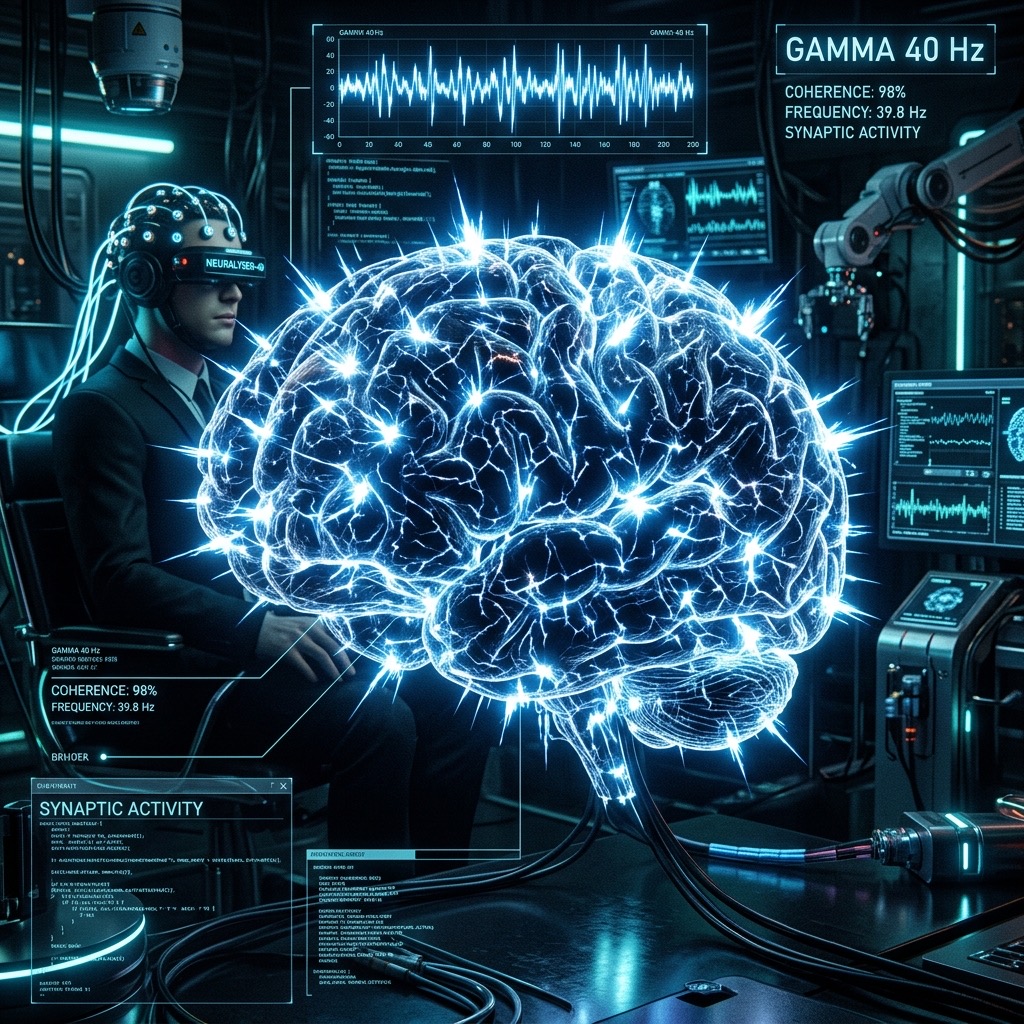
You didn't stumble onto 40 Hz by accident. Whether you're chasing the cognitive edge of Gamma brainwave states or trying to dial in a subwoofer that makes your chest cavity resonate, you've landed on a frequency that sits at a fascinating crossroads. It's low enough to be felt in your bones, yet high enough to be clearly perceived by most playback systems. This isn't just a number; it's a tool for altering consciousness and testing the physical limits of your audio gear.
Let's get into the nitty-gritty of why 40 Hz matters, how to generate it properly, and the pitfalls you'll likely encounter along the way.
Why This Specific Tone? The "Felt" Frequency for Cognitive Clarity
You searched for 40 Hz because you're likely dealing with one of two specific problems: mental fog or inadequate bass response.
- The Cognitive Problem: In the world of neuroacoustics, 40 Hz is the centerpiece of the Gamma band (30-100 Hz). Unlike Alpha (relaxation) or Delta (sleep), Gamma is associated with high-level information processing, active problem-solving, and the "Aha!" moment of conscious perception. If you're studying for a bar exam, debugging complex code, or engaging in deep creative work, you're using 40 Hz to entrain your brain into a state of heightened neural synchrony. You aren't looking to relax; you're looking to perform.
- The Acoustic Problem: If you're an audio enthusiast, 40 Hz is the critical benchmark for sub-bass. It's the frequency of the lowest notes on a standard bass guitar (low E) and the fundamental of many kick drums. If your system can't reproduce 40 Hz cleanly, your music sounds thin and gutless. You're here to test if your "sub" is actually doing its job.
This frequency solves the issue of non-physical audio. At 40 Hz, you aren't just hearing the tone; you're feeling the pressure waves against your skin. It bridges the gap between the intellectual (brainwave entrainment) and the physical (haptic feedback).
Gear Check: Headphones vs. The Subwoofer Dilemma
Here is where most people fail before they even start. Your equipment dictates your success with 40 Hz.
- The Hard Truth about Laptops & Phones: The tiny speakers in your laptop or smartphone physically cannot reproduce 40 Hz. They might produce a faint clicking sound or a weak buzz, but they will not generate the sub-bass pressure you need. If you are using built-in speakers, stop here; you will not achieve the desired effect.
- Headphones (The Accessible Option): You need over-ear, closed-back headphones with a frequency response that extends below 20 Hz (like studio monitors or high-end consumer cans). Earbuds are a gamble and often roll off the low end too early. With good headphones, you'll hear the tone clearly, but you will miss the physical vibration.
- Subwoofers (The Optimal Option): To truly unlock 40 Hz, you need a dedicated subwoofer or large floor-standing speakers with a 10-inch driver or larger. This is the only way to experience the "chest thump" and the physical rumble that makes 40 Hz so distinct. If you have a sub, place it in a corner of the room to reinforce the bass response via room gain.
Pro Tip: If you are using a subwoofer, your crossover settings matter. Set your subwoofer's low-pass filter to around 80 Hz to ensure it is handling the 40 Hz signal cleanly without distortion from higher frequencies.
Step-by-Step: Dialing in the Tone Generator
Once your gear is ready, follow these steps to get the most accurate and effective 40 Hz tone.
- Set the Frequency: Input 40 into the frequency field on the generator. Do not eyeball this; precision is key for brainwave entrainment.
- Select the Waveform: This is critical. For audio testing and physical vibration, choose a Sine Wave. It is the purest tone with no harmonics, allowing you to hear exactly what your sub is doing without masking distortion. For brainwave entrainment, a Square Wave is often preferred because it contains odd-order harmonics that some users find more "gripping" for the brain to lock onto. Start with Sine; switch to Square if you feel the tone is too subtle.
- Volume Control (The Golden Rule): Start with your system volume at 30%. Press play, then slowly ramp up the volume on your device or amplifier. Do not max out the volume on the generator first. You are looking for a comfortable listening level (around 60-70 dB), not a club volume. The goal is to feel the vibration without ear fatigue.
- Duration: For cognitive work, run the tone for 15-20 minute intervals. For subwoofer testing, a 10-second burst is sufficient to identify rattles or distortion.
Real-World Applications: From Deep Work to Sound System Tuning
You have the tone playing; now what? Here is how to leverage it effectively.
- Deep Work Sessions: Play the 40 Hz tone at a low volume while you work. The goal is not to be consciously aware of the sound but to feel a subtle "hum" in the room. This encourages your brain to produce Gamma waves, which are linked to peak mental performance. Pair this with a dark room and no other distractions.
- Subwoofer Calibration: Use the 40 Hz tone to find the "sweet spot" in your room. Walk around while the tone plays. You will notice the volume and pressure change dramatically depending on where you stand. Place your listening chair where the tone sounds the most solid and even. If you hear a "wobble" or the pitch seems to waver, you have a standing wave issue that needs acoustic treatment.
- Physical Relaxation: While 40 Hz is a "thinking" frequency, the physical vibration can be deeply grounding. If you suffer from restlessness, lie down and let the 40 Hz vibrations wash over your body. This is often used in sound therapy to "reset" the nervous system after high-stress events.
When 40 Hz Fails: Limitations and Hard Warnings
Let's be brutally honest about what this frequency cannot do.
- It will not work on bad speakers. If you are using a Bluetooth speaker or laptop speakers, you are hearing distortion, not 40 Hz. You will get zero cognitive benefit and potentially damage the tiny speakers.
- Hearing Damage is Real: Do not crank the volume to "feel" the bass more. While 40 Hz is low, it requires significant amplifier power to reproduce loudly. If you push a small amp into clipping, you generate high-frequency distortion that will damage your hearing. If the sound becomes harsh or painful, turn it down immediately.
- Not for Sleep: This is not a relaxation frequency. Using 40 Hz before bed can keep your brain alert and prevent you from falling asleep. Stick to Delta frequencies (1-4 Hz) for sleep.
40 Hz vs. 30 Hz: The Battle of the Sub-Bass
If 40 Hz isn't hitting the spot, you might be tempted to go lower. Here is the comparison:
- 30 Hz (The Rumble): This is pure, physical pressure. At 30 Hz, you lose the "note" and gain the "earthquake." It is excellent for testing the absolute limits of your subwoofer's excursion, but it is less effective for cognitive tasks because the pitch is so low it becomes almost inaudible to the human ear.
- 40 Hz (The Punch): This is the "musical" bass tone. It has enough frequency to be clearly defined as a note, making it better for brainwave entrainment (the brain can "lock onto" the rhythm). It also correlates with the fundamental frequency of the bass guitar, making it more useful for music production and mixing decisions.
Verdict: If you want to feel your insides vibrate, use 30 Hz. If you want to think clearly and test a musical frequency, stick with 40 Hz.
Troubleshooting: Why Isn't This Working?
Here are the three most common issues you'll face, and the fixes.
1. "I can't hear anything at all."
- Cause: Your speakers or headphones are not capable of reproducing this frequency, or the volume is too low.
- Fix: Check your device's EQ settings. Ensure there is no "Bass Boost" or "Loudness" feature that is cutting the low end. Plug in wired, over-ear headphones. If you still hear nothing, you are using equipment that physically cannot generate 40 Hz. You need a subwoofer.
2. "The tone sounds 'wobbly' or 'choppy'."
- Cause: This is usually a digital artifact or a standing wave in your room. If you are using a laptop, the CPU might be struggling with other tasks, causing the audio buffer to drop out.
- Fix: Close all other applications. If you are using a subwoofer, move it away from the wall. The "wobble" is likely a resonant frequency in your room cancelling out the 40 Hz wave, creating a phasing effect. Move your head position.
3. "The sound is distorted and 'farty'."
- Cause: You are driving your amplifier into clipping. The amp is trying to push too much power to move the speaker cone, and it's hitting its mechanical limits.
- Fix: Turn down the volume immediately. Lower the gain on your amplifier or the volume on the tone generator. If the distortion persists at low volumes, your speaker driver is damaged or your enclosure is too small for the driver. You need a larger box or a new driver.
Mastering 40 Hz is about respecting the physics of sound. Use the right gear, keep the volume moderate, and you'll unlock a powerful tool for both mental acuity and acoustic analysis.
40 Hz Gamma Wave: Cognitive Binding, Consciousness, and the Alzheimer Research Breakthrough
40 Hz is the most studied single frequency in the gamma band (30-100 Hz) and one of the most scientifically active areas in all of neuroscience. This oscillation is associated with the neural binding of distributed sensory information into unified conscious perception, peak cognitive performance, and heightened awareness during intense concentration and meditative presence. In recent years, 40 Hz stimulation has moved from basic neuroscience into clinical research, with landmark studies at MIT showing dramatic effects in Alzheimer disease models.
Neural Binding and the 40 Hz Consciousness Hypothesis
The binding problem is one of the central questions of neuroscience: how does the brain integrate information processed in dozens of separate regions into a single unified experience? Francis Crick and Christof Koch proposed in 1990 that 40 Hz gamma oscillations serve as the binding frequency, synchronizing activity across distant cortical regions to create the unified field of conscious awareness.
- Gamma binding: Neurons representing different features of the same object synchronize their firing at 40 Hz, signaling to the brain that they belong to the same conscious percept.
- Long-range synchrony: 40 Hz oscillations coordinate activity between frontal executive networks and posterior sensory regions, enabling integration of top-down attention with bottom-up sensory processing.
- Anesthesia and gamma: Loss of consciousness under general anesthesia is accompanied by collapse of long-range gamma synchrony, while return of consciousness coincides with its restoration, providing strong evidence for gamma role in awareness.
- Dreaming: REM sleep shows elevated gamma activity, consistent with the vivid internally generated conscious experience of dreaming occurring without external sensory input.
Alzheimer Research: The 40 Hz Sensory Stimulation Breakthrough
The most significant clinical development in 40 Hz research came from MIT professor Li-Huei Tsai and her team, whose 2016 paper in Nature and subsequent studies demonstrated that 40 Hz flickering light and sound stimulation dramatically reduced amyloid and tau pathology in Alzheimer mouse models and showed promising early results in human trials.
- MIT gamma entrainment study: One hour per day of 40 Hz light flickering reduced amyloid-beta levels by approximately 40-50% in hippocampal regions of Alzheimer mouse models, triggering microglial-mediated clearance.
- Audio 40 Hz extension: Subsequent work showed that 40 Hz auditory stimulation with clicks or tones produced similar effects across broader brain regions including auditory cortex and prefrontal areas.
- Combined audiovisual: Combining 40 Hz light and sound produced the strongest effects, reducing amyloid and tau across wider brain regions with functional improvements in mouse models.
- Human pilot trials: Early phase human studies confirm that 40 Hz audiovisual stimulation is safe, well-tolerated, and produces measurable EEG gamma entrainment, with ongoing trials examining cognitive outcomes in Alzheimer patients.
Cognitive Peak Performance and Gamma States
Outside the Alzheimer context, 40 Hz gamma is associated with the highest levels of cognitive performance: working memory at full capacity, rapid information processing, perceptual clarity, and the integrative thinking required for complex problem solving and creative synthesis.
- Working memory capacity: Gamma power in prefrontal and parietal regions scales with the number of items held in working memory, with 40 Hz specifically linked to binding multi-feature objects in memory.
- Perceptual acuity: Gamma oscillations sharpen the tuning of sensory cortex neurons, improving discrimination of fine differences in visual, auditory, and somatosensory stimuli.
- Expert meditator gamma: Long-term meditators trained in compassion and open presence practices show elevated resting gamma power, with some studies reporting 40 Hz amplitudes 25-30 times above baseline in the most experienced practitioners.
- Flow and peak experience: The gamma state correlates electrophysiologically with reported peak experiences and flow states, characterized by rapid cross-cortical integration and effortless high-level cognition.
Scientific Context and Practical Use
40 Hz has an exceptionally strong scientific foundation. The basic neuroscience of gamma oscillations in conscious binding is among the best-established in systems neuroscience, and the Alzheimer entrainment research represents a genuine clinical breakthrough currently advancing through human trials. Audio-based binaural beat entrainment at 40 Hz is straightforwardly achievable since the beat frequency lies within the audible range. Isochronic tones at 40 pulses per second are particularly effective. Sessions of 20-60 minutes are used in both research and wellness contexts. 40 Hz entrainment is the subject of active clinical investigation and represents one of the most promising intersections of neuroscience and accessible audio technology available today.