The 75 Hz Tone: Your Subwoofer's Transient Response Litmus Test
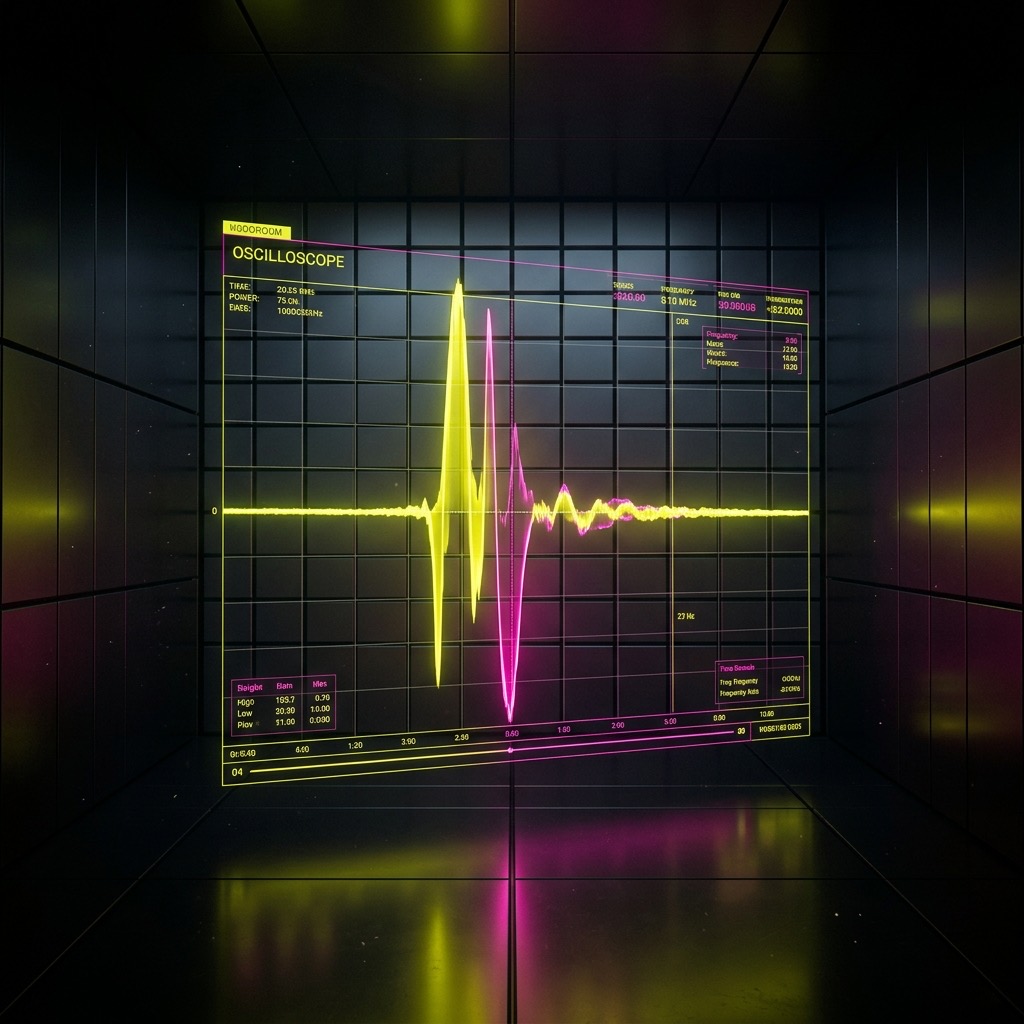
Most frequency sweeps treat bass as a monolithic block of rumble. But as an audio professional, you know that 75 Hz is a different beast entirely. It sits in a crucial no-man's-land—high enough to be directional, yet low enough to demand serious cone excursion. This specific tone is the ultimate test for how your subwoofer handles sudden, percussive bass attacks without smearing into a muddy thump. If you've ever felt a kick drum lose its "punch" or a bass line sound like an indistinct drone, 75 Hz is where you'll find the answer.
Why This Frequency Exists: The Transient Trap
You didn't search for 75 Hz by accident. You're likely chasing a specific problem: subwoofer lag. At 75 Hz, the wavelength is roughly 15 feet, meaning your room's pressure zones are working overtime. Unlike a pure 40 Hz sine wave that feels like a continuous pressure wave, 75 Hz is where the fundamental notes of a five-string bass guitar (low B string) and the upper register of a kick drum live. When you play this tone, you're not just hearing bass—you're hearing how quickly your speaker cone can start and stop. A sluggish subwoofer will make this tone sound like it's "blooming" or swelling, rather than delivering a tight, immediate thump. This is your diagnostic tool for that exact issue.
Gear Check: What You Need Before You Press Play
Do not reach for your laptop speakers. I mean it. Here is the non-negotiable equipment list for this frequency:
- Large Driver Subwoofers (10" or larger): This is the sweet spot. A dedicated sub in a properly sized enclosure will reproduce 75 Hz with authority. Small "satellite" speakers will struggle to move enough air.
- Full-Range Floor Standing Speakers: If you have quality towers with 8" woofers, you can test them, but be prepared for less output than a dedicated sub.
- Over-Ear Headphones (High-End Only): Only use planar magnetic or high-end dynamic headphones with a flat bass response. Cheap earbuds will distort and give you false positives.
- Amplifier Headroom: Ensure your amp is not clipping. At 75 Hz, a clipped signal sounds like a harsh buzz, not a bass note.
Step-by-Step: Dialing In Your 75 Hz Test
Your online generator is your lab equipment. Here is how to operate it precisely for this frequency:
- Select the Sine Wave: This is critical. Do not use the square wave for testing transients. The sine wave is a pure tone with no harmonics, allowing you to hear only the fundamental frequency and the speaker's direct response to it.
- Set Initial Volume to 50%: Start low. At 75 Hz, a sudden full-volume blast can cause mechanical failure in the voice coil if the cone is already at its excursion limit.
- Ramp Up in 10% Increments: Listen for the "crack" or "snap" at the very start of the tone. A good subwoofer will have an instantaneous attack. A poor one will have a soft, delayed onset.
- Use the Square Wave for Stress Testing: After the sine wave test, switch to the square wave. This adds odd-order harmonics, simulating the aggressive transient of a synth bass. If the cone "chuffs" or you hear mechanical noise, you've found your limit.
Real-World Applications: Tuning Your Room and Mix
Beyond just testing hardware, this tone is a practical mixing and room-tuning tool. Here is how to use it effectively:
- Room Mode Detection: Play the 75 Hz tone and walk around the room. If the volume drastically dips in the center and peaks in the corners, you have a standing wave issue. This is the frequency where most small rooms (12x12 feet) build up pressure.
- Subwoofer Crossover Alignment: If you are setting up a 2.1 system, use this tone to set your crossover. Your main speakers should be rolling off around 80 Hz. Play the tone and adjust the sub's low-pass filter until the bass sounds like it's coming from the satellites, not the corner sub.
- Bass Guitar EQ: If you record music, this is the fundamental of a standard tuned bass guitar (E string is 41 Hz, but the 12th fret harmonic hits near 82 Hz). Use this tone to check if your room is masking the "growl" of the bass in your mix.
Hard Limits: When 75 Hz Will Fail You
Let's be brutally honest about physics. This tone will not work on your smartphone. The speaker driver is physically too small to reproduce a 75 Hz wavelength with any audible pressure. You will likely hear a faint click or a tinny buzz—that is not the tone, that is the speaker tearing itself apart trying to move air it cannot displace.
Additionally, do not use this tone to test hearing loss. Our ears are least sensitive at this frequency. You might not "hear" it as a pitch, but rather feel it in your chest. If you do not feel a physical pressure change in the room, your subwoofer is not moving enough air, or your volume is too low. Also, beware of prolonged exposure. While 75 Hz is not as harsh as 3 kHz, high SPL (above 100 dB) at this frequency can cause fatigue and potentially damage the inner ear's hair cells over time, even if it doesn't "hurt."
The 75 Hz vs. 60 Hz vs. 80 Hz Conundrum
Why not just use 80 Hz? That is the THX standard for home theater crossovers. The difference is subtle but critical. At 80 Hz, the tone is more directional, meaning your brain can localize where the sound is coming from. At 60 Hz, you enter the realm of pure "rumble" where the sound becomes omnidirectional and you feel it more in your gut.
75 Hz is the perfect compromise. It is high enough to test the speed and articulation of the driver (the "punch") but low enough to interact with room boundary reinforcement. If your system sounds tight at 75 Hz but boomy at 60 Hz, your room is the problem, not your speaker. If it sounds sloppy at 75 Hz but clean at 100 Hz, your subwoofer's motor structure is weak.
Troubleshooting: Why Your 75 Hz Test Sounds Wrong
Issue 1: The tone sounds "wobbly" or has a tremolo effect.
This is not your speaker—it's your room. At 75 Hz, the wavelength is interacting with two parallel walls. You are hearing the phase cancellation between the direct sound and the reflected sound. Fix: Move your listening position away from the back wall by at least 3 feet, or place the subwoofer in a different corner.
Issue 2: You hear a rattling noise from your speaker cabinet.
This is mechanical. The cone is moving enough to vibrate a loose screw, a port tube, or a dust cap. Fix: Tighten all driver mounting screws. If the rattle persists, check the bass port—if it's a rear-firing port, ensure it's not blocked by an object within 6 inches.
Issue 3: The tone is inaudible, but you feel pressure.
This is normal if you are using a subwoofer-only setup. The human ear is notoriously insensitive at this frequency. You need to increase the volume by 10-15 dB compared to a 1 kHz tone to perceive equal loudness. Fix: Do not crank it further if you feel physical discomfort in your ears. Instead, switch to a square wave, which adds harmonics that your ear can perceive as "pitch."
75 Hz Subwoofer and Bass Test Tone
A 75 Hz test tone sits in the bass range between 40-80 Hz, where kick drums and bass guitar fundamentals live. It is heard as deep, warm bass with strong physical impact. Use this tone to evaluate the low-frequency performance of your subwoofer, woofer, or bass-capable speakers.
What 75 Hz Reveals About Your Audio System
- Subwoofer Extension: Tests how deep your subwoofer reaches without distortion or roll-off at 75 Hz.
- Room Acoustics: Reveals standing waves, bass buildup, and room modes that affect low-frequency performance.
- Crossover Accuracy: Helps verify your subwoofer crossover is set correctly relative to your main speakers.
- Amplifier Headroom: Tests whether your amplifier delivers clean power at 75 Hz under load.
How to Run This Bass Test
Play the 75 Hz tone at moderate volume. Listen for distortion, rattle, port noise, or uneven output. Adjust subwoofer level, crossover frequency, and room positioning accordingly. For precision, pair with an SPL meter or room correction software.
Play 75 Hz Bass Test Tone Free Online
Generate a pure 75 Hz sine wave instantly in your browser. No software needed. Use it anytime to quickly assess your bass performance.